
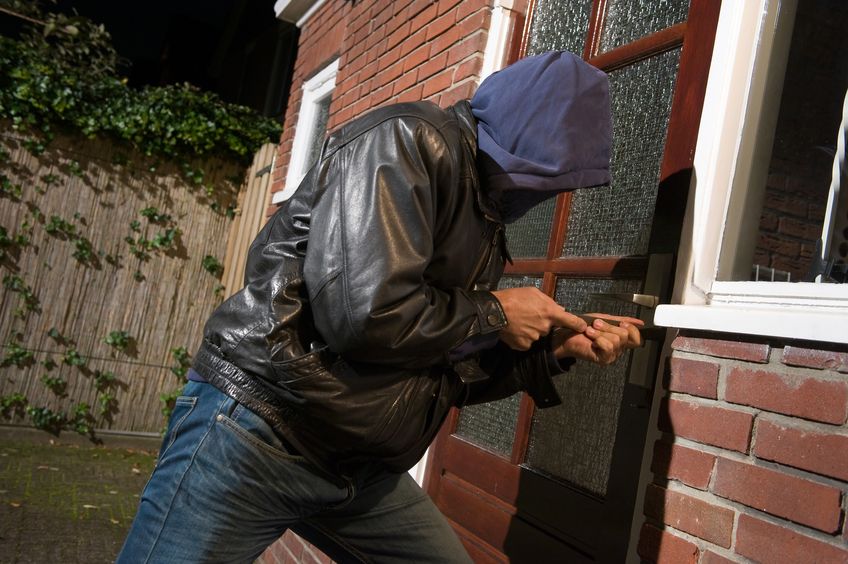
Breaking and entering charges are often misunderstood. Many people assume that breaking and entering is the same thing as burglary, but under Oklahoma law, the two offenses are not always identical. While burglary is generally a felony offense, breaking and entering may be charged as a misdemeanor in certain circumstances. Nevertheless, a conviction can still carry serious consequences, including jail time, fines, probation, and a permanent criminal record. If you have been charged with breaking and entering in Wagoner County, understanding the nature of the offense and the defenses available to you is critical.
To see this article as a video, click here.
What Is Breaking and Entering?
Oklahoma law recognizes breaking and entering as a separate offense from burglary. In general, breaking and entering may involve unlawfully entering a dwelling or structure without permission, or entering certain structures with unlawful intent under circumstances that do not rise to the level of burglary.
Importantly, “breaking” does not necessarily require smashing a window or kicking down a door. Even minimal force used to overcome an obstacle to entry may satisfy this element. Opening a closed door, lifting a window, or otherwise gaining unauthorized entry may be enough under certain circumstances.
Breaking and Entering Versus Burglary
One of the most important issues in these cases is determining whether the alleged conduct constitutes breaking and entering or burglary.
Burglary generally requires proof that the defendant entered a structure with the intent to commit a crime inside. Depending on the facts, burglary is often prosecuted as a felony and carries significantly greater penalties.
Breaking and entering, on the other hand, may apply when the facts do not satisfy all of the elements necessary for a burglary conviction. In some situations, prosecutors initially file burglary charges and later reduce them if the evidence regarding criminal intent is weak.
What Must the State Prove?
In a breaking and entering prosecution, the State generally must prove specific elements beyond a reasonable doubt.
For example, in a prosecution for breaking and entering a dwelling without permission, the prosecution must establish that the defendant:
- Acted willfully;
- Acted intentionally;
- Broke into the structure;
- Entered the structure;
- Lacked permission from the owner or occupant.
If prosecutors cannot prove each required element, a conviction should not occur.
Common Situations Leading to Charges
Breaking and entering allegations arise in a variety of circumstances.
Common examples include:
- Entering a residence after permission has been revoked;
- Entering a vacant property;
- Disputes involving former roommates or romantic partners;
- Entering abandoned structures;
- Attempting to retrieve property from another person’s home;
- Entering businesses after hours.
In some cases, the accused genuinely believes they had permission to enter, creating important factual disputes.
Lack of Permission Is Often Disputed
Many breaking and entering cases revolve around whether permission existed.
A person may have previously lived at the property, possessed a key, shared access with another occupant, or believed they were authorized to enter. When evidence exists that permission was granted or that it was reasonably believed to exist, the prosecution may have difficulty proving its case.
Witness testimony, text messages, emails, and prior living arrangements often become important evidence on this issue.
Lack of Intent May Be a Defense
When prosecutors attempt to pursue burglary-related allegations, intent frequently becomes a central issue.
The State must often prove that the defendant intended to commit a crime at the time of entry. Merely entering a structure does not automatically establish criminal intent.
For example, entering a building to retrieve personal belongings, seek shelter, or locate another individual may raise significant questions regarding the defendant’s state of mind. Because intent exists inside a person’s mind, it is often one of the most heavily contested aspects of these cases.
Mistaken Identity and Witness Credibility
Like many criminal cases, breaking and entering prosecutions sometimes depend heavily upon eyewitness testimony.
Witnesses can be mistaken regarding:
- Who entered the property;
- When the entry occurred;
- Whether permission existed;
- What actually happened inside the structure.
Surveillance footage, electronic communications, and other evidence may reveal inconsistencies that undermine the prosecution’s case.
Challenging Illegal Searches and Seizures
Many breaking and entering investigations involve police searches, seizures of evidence, and interviews with suspects.
The Fourth Amendment protects individuals from unreasonable searches and seizures. If law enforcement obtained evidence through an unlawful search or violated constitutional protections, the defense may seek suppression of that evidence.
In some cases, constitutional violations can significantly weaken the prosecution’s ability to proceed.
Potential Penalties
The penalties for breaking and entering depend upon the specific charge, the facts of the case, and the defendant’s criminal history.
A misdemeanor conviction may result in:
- County jail time;
- Fines;
- Probation;
- Court costs;
- A permanent criminal record.
If the facts support a burglary charge instead, the potential penalties can increase dramatically because burglary offenses are generally prosecuted as felonies.
Wagoner Criminal Defense Attorneys
Breaking and entering cases often involve disputes regarding permission, intent, identification, and constitutional rights. What may initially appear to be a straightforward property crime can quickly become a serious felony matter if prosecutors pursue burglary allegations. Because a criminal conviction can have lasting consequences, obtaining experienced legal representation as early as possible is often one of the most important decisions a person can make when facing breaking and entering charges. For a free consultation with a criminal defense attorney at Kania Law – Wagoner Attorneys, call 918-283-7394. You can also ask a free online legal question by following this link.